Decide the use case
First, think about how the card will be used.
Membership cards
Point cards
Patient cards
Employee badges
Access control cards
The recommended card type varies depending on the use case.
We'll help you choose the right card for your needs — membership cards, patient cards, employee badges, point cards, and more.
No expert knowledge required. Based on your intended use and preferences, we'll guide you to the card specifications that fit your purpose.
You don't need to memorize card types or material names.
Once you decide "what it's for," "how you'll manage it," and "how long you'll use it," it becomes much easier to narrow down the right card for your needs.
First, think about how the card will be used.
Membership cards
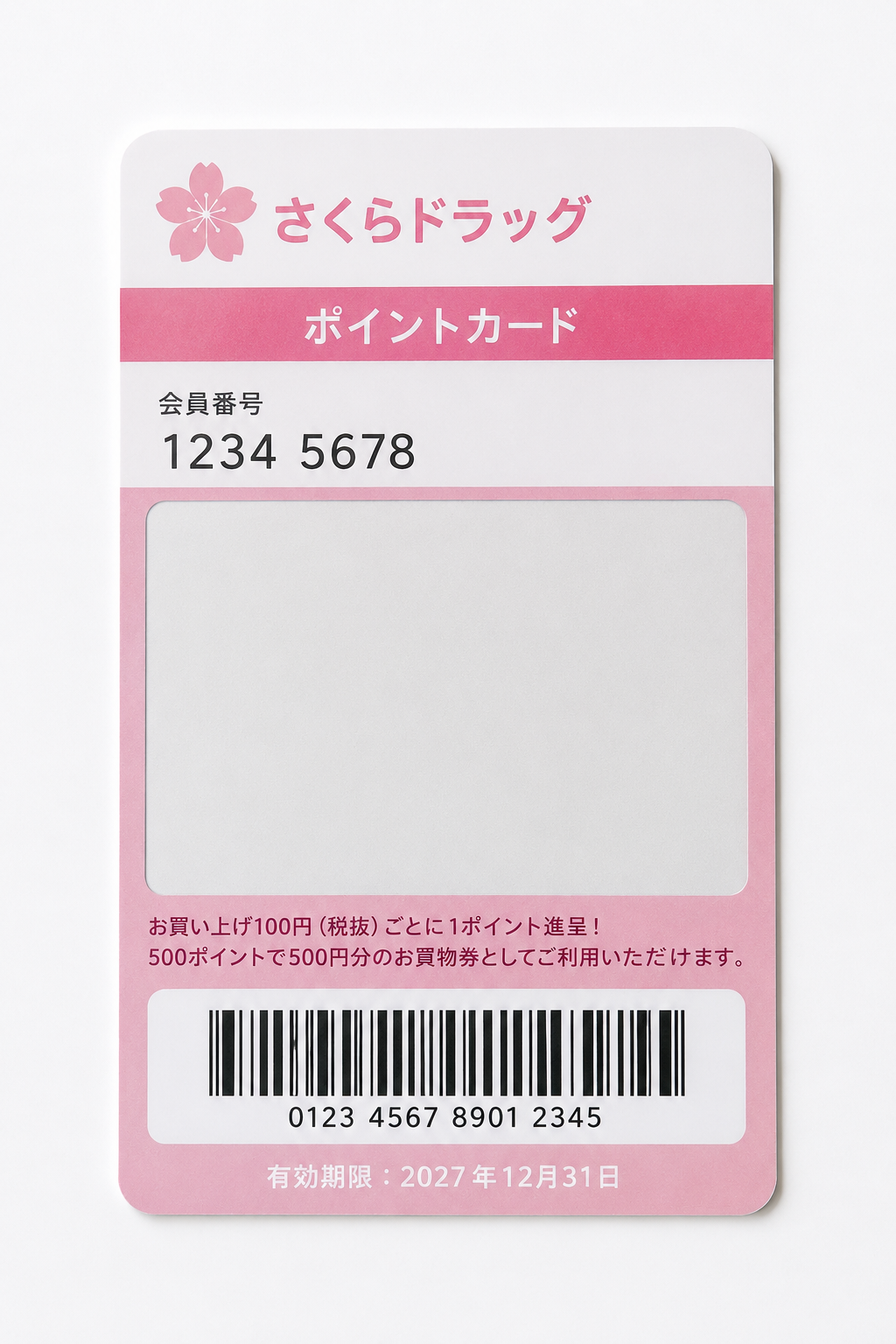
Point cards
Patient cards
Employee badges
Access control cards
The recommended card type varies depending on the use case.
Decide how information will be managed.
Manage by printed content
Read via QR code / barcode
Use a magnetic stripe card
Authenticate with an IC card
The specifications required will vary by operating method.
Finally, choose the card thickness and finishing.
For long-term use, choose 0.76mm
For thin, mass distribution, choose 0.25mm
Add finishing such as QR codes or numbering as needed
Choose specifications tailored to your use case with no waste.
Choosing by use case makes card selection much easier.
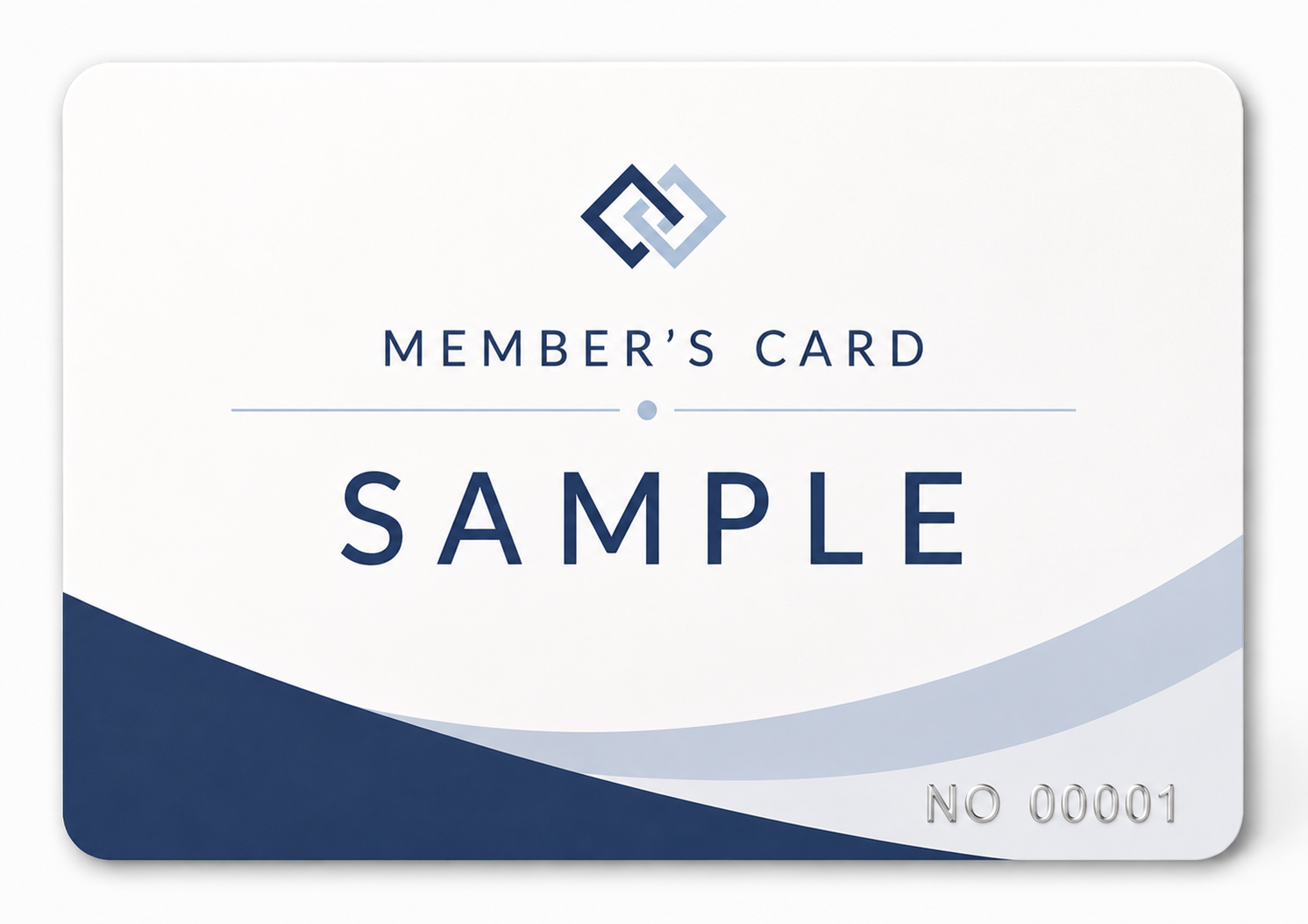
The standard type chosen most often for membership cards, point cards, patient cards, and more.
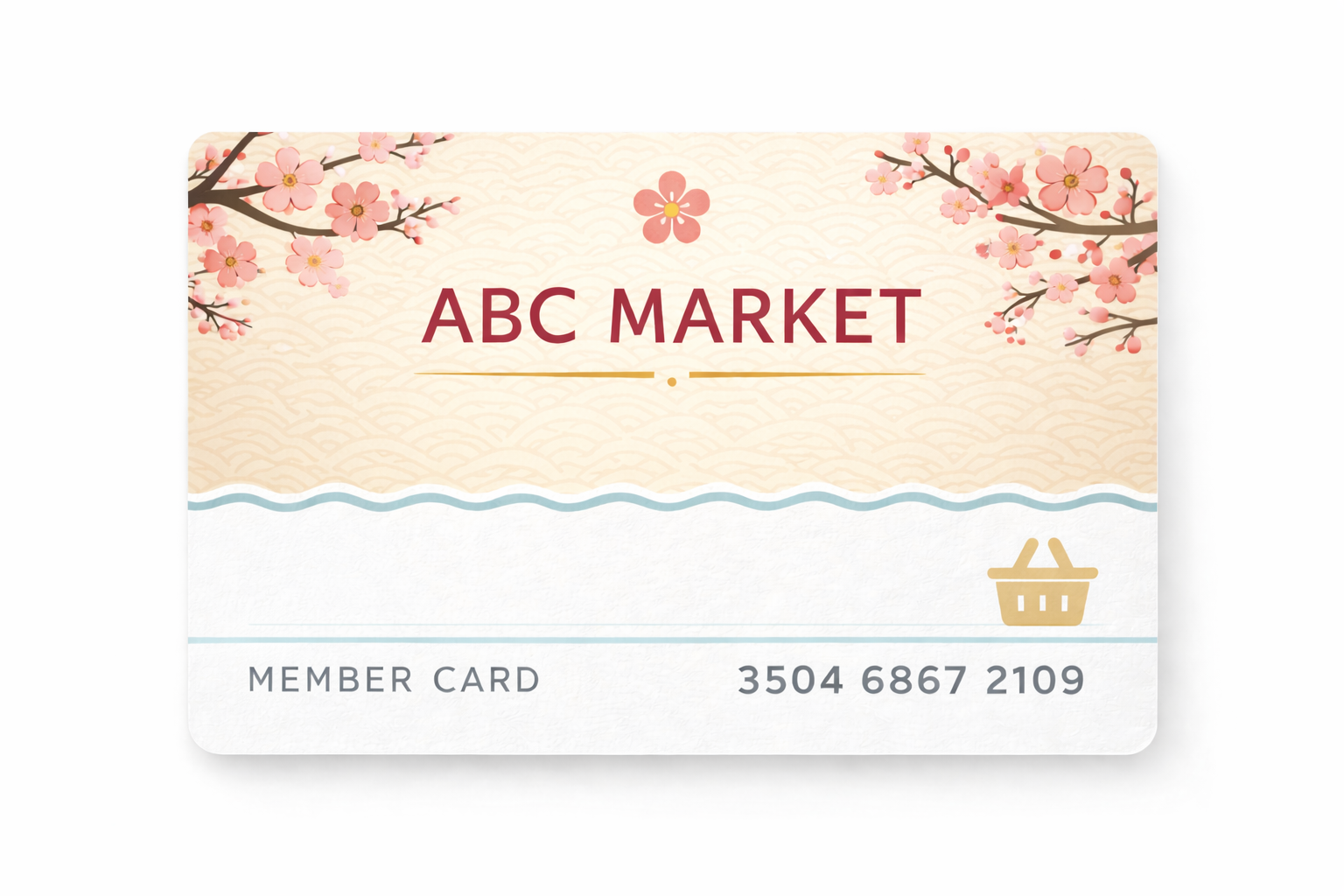
Thin and lightweight — recommended for handout cards and promotional cards.
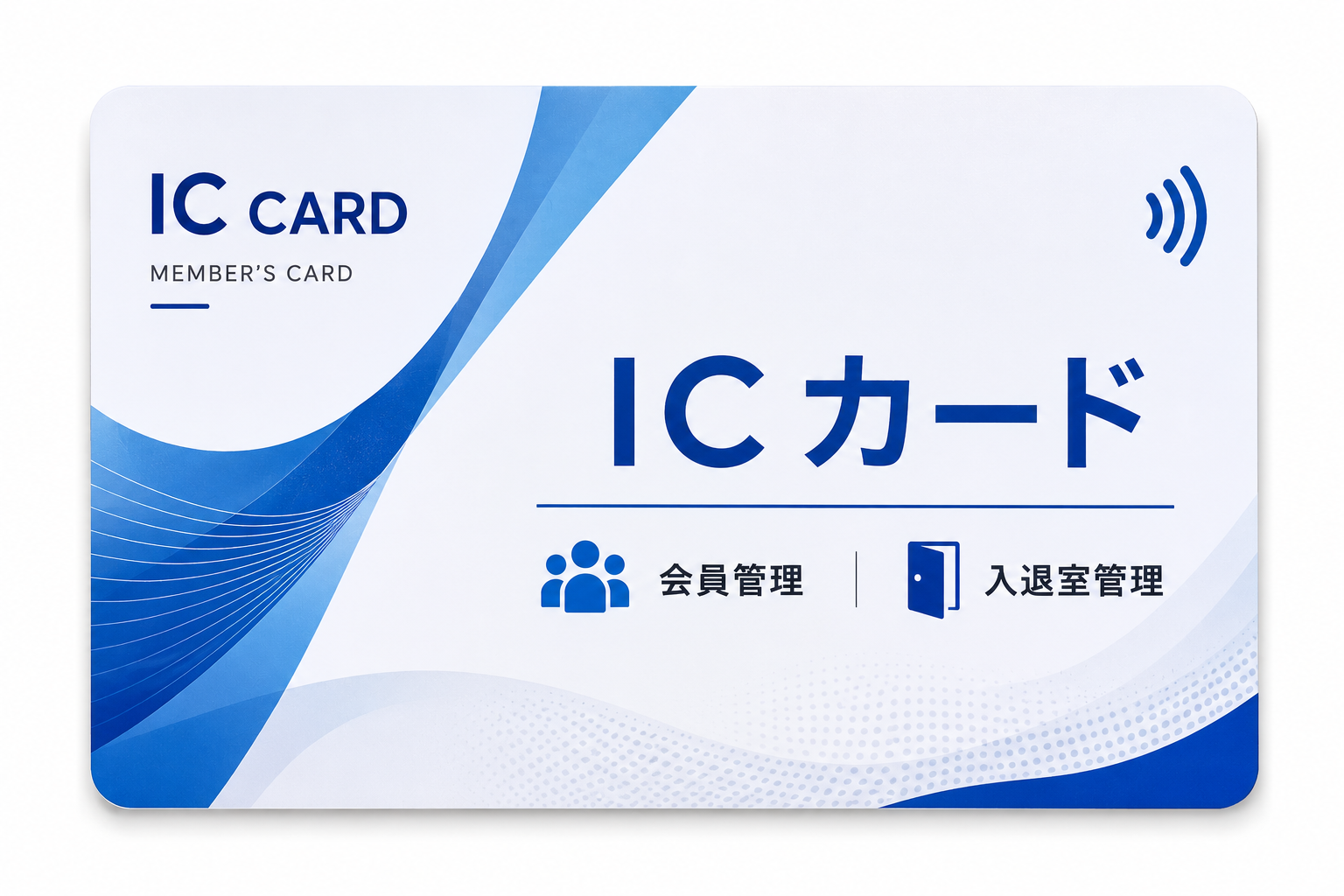
A contactless card read by tapping.
The information printed on the card surface can be rewritten and reused repeatedly.
"PVC" and "PET" are the two materials most commonly used in card production.
The most common card material, chosen by the majority of customers as the standard option.
A material chosen for thin cards or when material properties matter for your specific use case.
Both materials suit a wide range of uses, but they differ in thickness, texture, and durability.
PVC is generally chosen for standard membership and point cards, while PET is chosen when thinness or specific material properties matter.
Card thickness is chosen based on the intended use and how long the card will be used.
The standard thickness, the same as a credit card.
Recommended for cards used long-term, such as membership cards, employee badges, patient cards, and IC cards.
The most commonly chosen thickness.
Slightly thinner than standard, balancing lightness and strength.
A thin type, also used for handout cards and promotional purposes.
The thinnest type available.
Lightweight and easy to carry, ideal for mass distribution and promotional use.
The equipment and operation required depend on how you store information on the card.
A method for reading card numbers or membership information.
Easy to integrate with dedicated apps or POS systems, and widely used for membership and point cards.
and more.
A type that is read via the magnetic stripe on the back of the card.
Used by stores and facilities that already use magnetic stripe readers.
and more.
A contactless type read by tapping the card.
Used for applications requiring a high level of management, such as member authentication and access control.
and more.
A card whose surface display can be rewritten and reused repeatedly.
Used for operations that require regular updates.
* Requires a rewritable-card-compatible printer.
You can add the finishing options you need for your use case. There's no need to include every option — we recommend choosing only what your operation requires.
Used to manage membership numbers or customer information.
Prints different information on each card.
Member numbers, employee numbers, and management numbers can vary card by card.
Can be used as a signature field or handwriting area.
Supports operation with magnetic stripe readers.
Express logos or text in gold or silver foil.
Give card numbers or names a raised, 3D appearance.
A subdued, premium-feeling texture.
For special specifications such as IC cards, magnetic stripe cards, and rewritable cards, we recommend confirming compatibility with your equipment beforehand.
Even without design data, we can advise on production based on your logo or text information.
Delivery times vary depending on the card type and finishing options.
Standard printed cards ship within 10 business days after final design approval.
| Standard printed cards | Ships within 10 business days after final design approval |
|---|---|
| IC cards / rewritable cards | Ships within 10 business days after final design approval |
| Blank white cards | Approximately 1–7 business days |
| When design creation is needed | Design proposal provided within approximately 3 business days |
* Orders with design confirmed by 3:00 PM are processed the same day; those confirmed after 3:00 PM are processed the next business day.
* Delivery may take longer than usual during long holidays, year-end/New Year, and peak seasons.

Register your details
to create an account

Select a product and
enter your order details

Review your details
and submit your artwork

Printed and finished
with careful attention

After inspection, your
order is delivered
* Standard delivery estimates will be provided once your order details and specifications are confirmed.
* If design confirmation is required, production begins once confirmation is complete.
If you can tell us the use case, quantity, read method, and desired delivery date, we can work together to sort out the right card type and finishing.